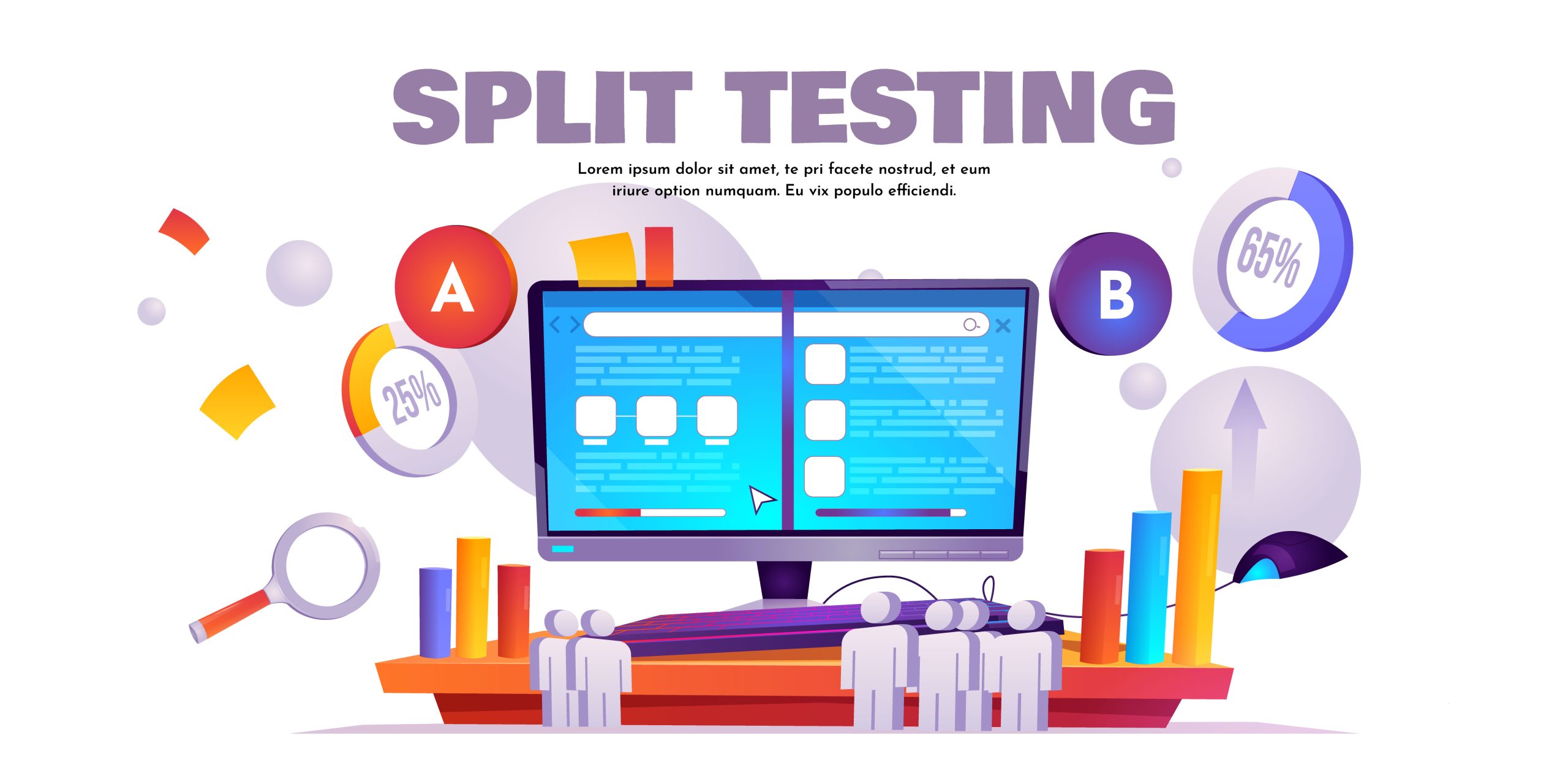
A/B testing is one of the most powerful tools in a digital marketer’s toolkit. Yet the majority of popular testing platforms depend heavily on third-party cookies and client-side scripts that raise serious privacy concerns. As regulations tighten and browsers crack down on cross-site tracking, it is time to rethink how we run experiments on the web.
The Problem: Third-Party Scripts and Cookies Everywhere
Traditional A/B testing tools like Optimizely, VWO, and the now-retired Google Optimize all share a common architecture. They inject JavaScript into your pages, set cookies to identify returning visitors, and send behavioral data back to external servers. This approach creates multiple privacy issues: visitors are tracked across sessions without meaningful consent, personal data flows to third-party infrastructure, and the scripts themselves can slow down page load times significantly.
For website owners who care about their visitors’ privacy, this model is fundamentally broken. Every third-party script you load is another vector for data leakage, another cookie banner disclosure, and another dependency on infrastructure you do not control.
GDPR Implications of Traditional A/B Testing
Under the General Data Protection Regulation, any processing of personal data requires a lawful basis. Traditional A/B testing tools typically assign persistent identifiers to visitors, which qualifies as personal data under GDPR. This means you need either explicit consent or a legitimate interest assessment before running tests, and most consent management platforms will block these scripts until a visitor opts in.
The practical consequence is stark: if 40 to 60 percent of your European visitors decline cookies, your A/B test results become unreliable. You are testing on a biased sample of users who accepted tracking, not on your actual audience. This defeats the entire purpose of experimentation.
Server-Side A/B Testing: How It Works
Server-side A/B testing moves the experiment logic from the browser to your backend. When a request arrives, your server decides which variant to show before the page is even rendered. No client-side JavaScript is injected, no third-party cookies are set, and no data leaves your infrastructure.
Why Server-Side Testing Is Privacy-Friendly
Because the variant assignment happens on your own server, you have complete control over how visitors are bucketed. You can use session-based assignment that does not persist across visits, or hash-based assignment using anonymized request attributes like a truncated IP address. Neither approach requires storing personal data or setting tracking cookies. The visitor simply receives a page and never knows an experiment is running.
Open Source A/B Testing Tools
Several mature open source platforms now make server-side testing accessible without vendor lock-in. Here are three worth evaluating.
GrowthBook
GrowthBook is a feature flagging and experimentation platform that supports server-side experiments with SDKs for most popular languages. It connects to your existing data warehouse for analysis, meaning experiment data never leaves your infrastructure. The self-hosted option gives you full control over where data is stored and processed.
Unleash
Unleash focuses on feature toggles with built-in support for gradual rollouts and A/B experiments. Its architecture is designed for self-hosting, and the open source edition includes the core functionality needed to run privacy-respecting experiments. Variant assignment is handled server-side with consistent hashing, so visitors see the same variant within a session without requiring persistent cookies.
Flagsmith
Flagsmith provides feature flags, remote configuration, and A/B testing in a single platform. Like the others, it can be fully self-hosted and offers server-side SDKs that keep experiment logic on your backend. Its segment and identity features allow targeting without relying on third-party data.
Combining A/B Tests with Privacy-First Analytics
Running experiments is only half the equation. You also need analytics to measure outcomes. Matomo offers a dedicated A/B testing module that integrates directly with its privacy-first analytics platform. Because Matomo can run without cookies and stores all data on your own server, the entire experimentation pipeline stays GDPR-compliant by design. You define variants, assign traffic, and analyze conversion rates all within a single self-hosted tool.
This tight integration eliminates the need to stitch together data from separate systems, reducing both complexity and the surface area for privacy risks.
The Simple Approach: URL Parameters and Plausible Goals
Not every experiment needs a full-featured platform. For simple tests, you can create two versions of a landing page at different URLs, split traffic at the server or CDN level, and track conversions using Plausible goals. Plausible is a lightweight, cookie-free analytics tool that can track custom events without any personal data collection.
For example, you might serve /pricing/ and /pricing-v2/ to equal portions of traffic using a simple nginx configuration or a Cloudflare Worker. Each page fires a Plausible goal event on the desired action, such as a signup button click. You then compare conversion rates between the two URLs in your Plausible dashboard. No cookies, no personal data, no consent banner required.
Statistical Significance Without Tracking Individuals
A common objection to privacy-first testing is that you cannot achieve statistical significance without tracking individual users across sessions. In practice, this concern is overstated. Most meaningful A/B tests measure single-session conversions: did the visitor sign up, click a button, or complete a purchase during this visit? For these metrics, you do not need to identify returning visitors at all.
Aggregate counts of visitors and conversions per variant are sufficient to run a standard chi-squared test or a Bayesian analysis. Tools like GrowthBook can perform this analysis on anonymized, aggregated data. You get rigorous statistical results without ever building an individual-level profile of any visitor.
Real-World Example: Testing Two Landing Page Variants
Consider a SaaS company testing two hero sections on their homepage. Variant A uses a product screenshot with a technical description. Variant B uses a customer testimonial with a benefits-focused headline. Using server-side assignment with GrowthBook and Plausible for measurement, the team splits traffic 50/50 at the application layer.
Over two weeks, Variant A receives 4,200 unique visitors with 168 trial signups, a 4.0 percent conversion rate. Variant B receives 4,150 unique visitors with 224 signups, a 5.4 percent conversion rate. A chi-squared test confirms statistical significance at the 95 percent confidence level. The team rolls out Variant B, having validated the change with zero personal data collection and complete GDPR compliance.
Best Practices for Privacy-Compliant Experimentation
To run effective A/B tests without compromising visitor privacy, follow these guidelines. First, prefer server-side assignment over client-side scripts whenever possible. Second, use session-scoped or hash-based bucketing instead of persistent cookies. Third, measure outcomes with privacy-first analytics tools like Plausible or self-hosted Matomo rather than Google Analytics. Fourth, keep experiment data aggregated and avoid storing individual-level behavioral profiles. Fifth, document your experiments in your privacy policy even if no personal data is involved, as transparency builds trust.
Finally, remember that the goal of experimentation is to make better decisions, not to build surveillance infrastructure. Privacy-compliant A/B testing is not a compromise. It is a more focused, more reliable, and more ethical approach to understanding what works for your audience.